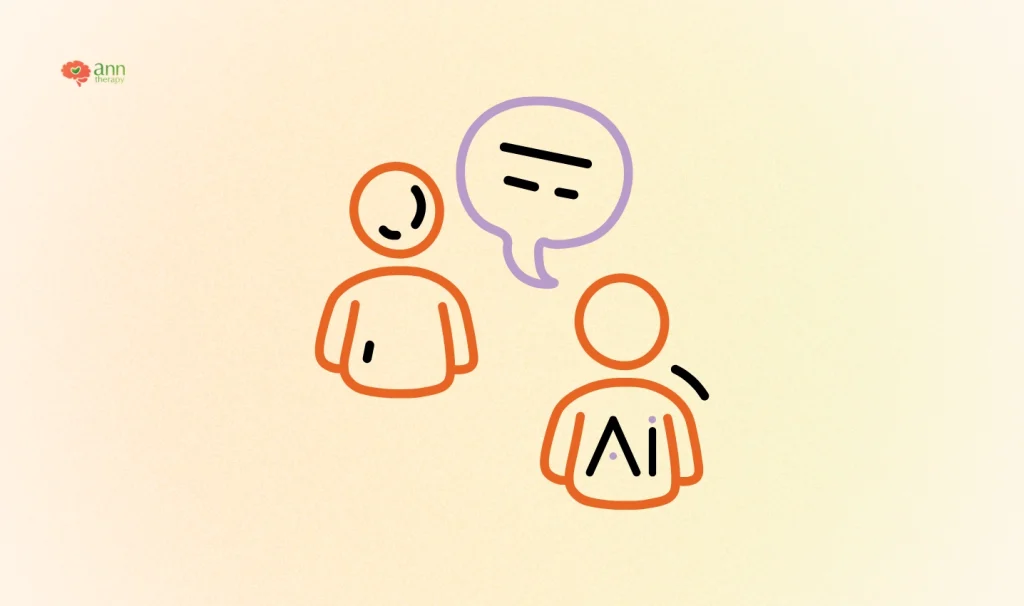
What begins as a few casual lines typed late at night can gradually turn into a place you return to whenever you want to feel heard. Quick, gentle, and seemingly understanding responses can sometimes create a surprisingly strong sense of being understood.
This feeling was portrayed beautifully in Her (2013), where Theodore finds understanding and companionship in an intelligent operating system. Amid the difficulties of his real-life relationships, a virtual presence becomes a source of comfort: always available, rarely judgmental, and able to respond to things he struggles to say elsewhere.
In this article, we look at this growing habit from a psychological perspective: why talking to AI can feel so comforting, and what may happen when it begins to take the place of real-world connection.
| Why do we choose AI?
It is not difficult to see why AI can become appealing when we feel lonely, overwhelmed, or reluctant to burden someone else.
Real relationships come with limits. The other person may be busy, may not know what to say, may disagree with us, or may respond in a way that leaves us disappointed. AI, on the other hand, is almost always available, responds quickly, and tends to use language that feels gentle and accepting.
That can reduce two common concerns people have when opening up to others: the fear of being judged and the fear of becoming a burden.
Supportive responses can make these conversations feel reassuring. But feeling understood by an AI is still different from being understood within a human relationship, where both people bring their own emotions, limitations, and lived experiences.
| The cost of frictionless conversation
Part of what makes AI easy to talk to is that the interaction often involves less friction than relationships in everyday life.
People may disagree with us. They may misunderstand what we mean, respond awkwardly, or need time before they know what to say. Those moments can be uncomfortable, but they are also a normal part of building closeness with another person.
If we become accustomed to a space where responses are immediate and usually phrased in an easy-to-receive way, real-world interactions may begin to feel more demanding. We have to wait, explain ourselves, tolerate differences, and sometimes sit with the uncomfortable experience of not feeling understood right away.
AI does not necessarily make us lonelier. But if it becomes the only place we turn to whenever we need to talk, our real-world relationships may gradually receive less of our attention.
| How much can an algorithm really help?
AI can be useful in certain moments. It may help you put feelings into words, organize your thoughts, consider another perspective, or simply give you somewhere to write when you are not ready to talk to another person.
But AI does not have lived experience or emotions, and it does not participate in a relationship with you in the way another person can.
A friend may misunderstand you and then come back to ask more. Someone close to you may simply sit beside you without needing to say anything. In therapy, the relationship between therapist and client also develops over time, through trust, difficult conversations, misunderstandings, and moments that cannot be resolved by finding the right words alone.
For that reason, AI may be most useful as a supportive tool rather than a replacement for human relationships.
If you have been turning to AI more often when you feel lonely, it may be worth noticing what makes those conversations comforting. Is it being heard? Not feeling judged? Or simply knowing that something will always respond? Sometimes the answer can tell us something about what we may be missing — or hoping to find — in our relationships with other people.